EN




What Functions Laminate Heat Press Machine Has For Panel Processing
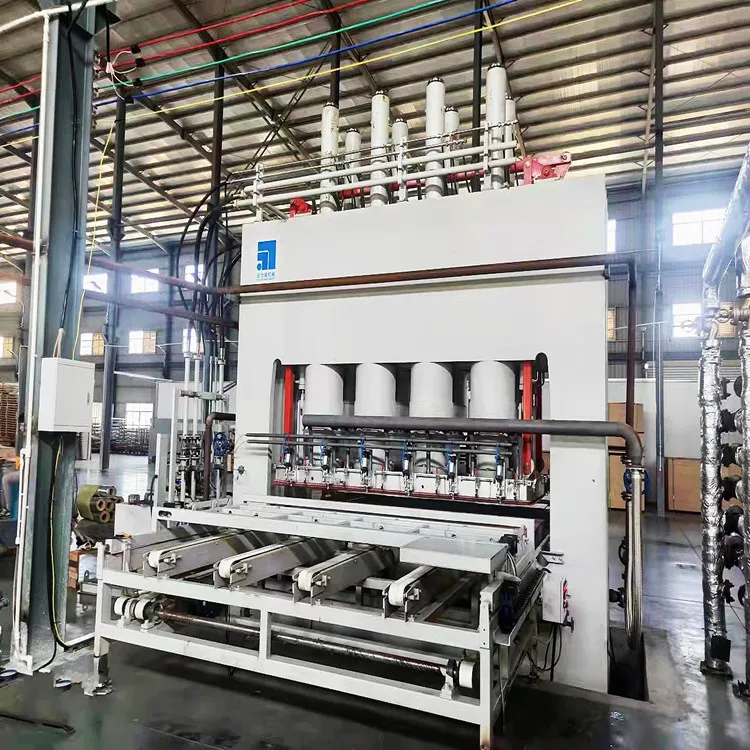
In industrial woodworking and engineered board manufacturing, precise surface finishing and core structural integrity dictate product quality. While general architectural guides cover high-level workshop setups, dedicated panel processing requires deep technical mastery of thermal compression machinery. A specialized laminate heat press machine serves as the operational backbone for bonding decorative overlays, reinforcing engineered cores, and flattening raw substrates.
Understanding the core functions of a laminate heat press machine helps plant managers and technical engineers select the ideal machinery configuration, optimize thermal cycles, and prevent costly manufacturing defects such as telegraphing, blistering, or delamination.
Technical Overview: Core Functions in Panel Processing
A heavy-duty laminate heat press machine does far more than simply apply heat to surface overlays. It executes a multi-variable physical and chemical transformation across the engineered panel structure through a systematic workflow:
-
Substrate Loading: Positioning MDF, particle board, plywood, or blockboard core sheets.
-
Alignment & Overlay Placement: Applying HPL, wood veneer, or melamine-impregnated decorative paper.
-
Thermal Activation & Hydraulic Compression: Engaging isobaric pressure across the full board surface.
-
Curing & Resin Polymerization: Setting UF, MUF, or PUR adhesives under controlled heat.
-
De-gassing & Pressure Relief Cycle: Controlled pressure release to vent trapped vapor.
-
Unloading & Calibrated Cooling Stage: Moving finished panels to cooling racks for dimensional stabilization.
Key Functions of a Laminate Heat Press Machine
Thermosetting Adhesive Polymerization & Deep Thermal Transfer
The primary mechanical objective of a laminate heat press machine during panel processing is the controlled thermal activation of cross-linking resin adhesives. Whether working with Urea-Formaldehyde (UF), Melamine-Urea-Formaldehyde (MUF), or Polyurethane (PUR) glues, the press platen provides uniform heat conductivity.
-
Isothermal Distribution: High-precision drilled steel platens ensure thermal tolerance within plus or minus 1 degree Celsius across the entire surface area.
-
Controlled Curing: Prevents glue-line crystallization by maintaining constant surface heat, accelerating resin curing times from hours down to seconds.
Isobaric Hydraulic Pressure Application
Surface uniformity during panel processing depends entirely on how evenly force is transmitted across raw MDF, particle board, or plywood core sheets.
-
Structural Stabilization: The hydraulic system of a laminate heat press machine eliminates micro-voids between the core substrate and decorative laminates such as HPL, CPL, or natural wood veneers.
-
Telegraphing Prevention: Calibrated hydraulic cylinder stroke speed prevents pressure spikes, reducing internal stress and avoiding core pattern show-through on delicate high-gloss laminates.
| Parameter / Metric | Short-Cycle Laminate Heat Press | Multi-Daylight Hot Press Machine |
|
Platen Pressure Range |
35 - 45 kg/cm² |
16 - 25 kg/cm² |
|
Operating Temperature |
180°C - 210°C |
120°C - 150°C |
|
Typical Cycle Time |
15 - 30 seconds |
3 - 6 minutes |
|
Primary Substrate Match |
Particle Board, High-Density MDF |
Heavy Plywood, Blockboard, Veneers |
|
Target Overlay Compatibility |
Melamine Impregnated Paper, HPL |
Natural Wood Veneer, Reconstituted Wood |
Surface Leveling, Veneer Flattening, and Calibrated Stress Relief
Beyond bonding overlays to substrates, a laminate heat press machine operates as a critical leveling and flattening system for natural timber veneers and uneven engineered boards.
-
Moisture Equilibrium Balancing: Heat and pressure drive out localized moisture pockets, preventing post-process panel bowing and warping.
-
Veneer Fluting Elimination: Natural wood sheets often exhibit uneven grain height. High-tonnage pressure flattens grain variations prior to final resin setting, delivering smooth sanding-ready surfaces.
Precision Micro-Embossing and Tactile Texture Imprinting
In modern furniture manufacturing, decorative melamine-impregnated paper requires realistic wood grain, stone, or matte textures. A specialized hot press machine equipped with textured stainless-steel press plates directly imprints micro-structures into the curing resin layer.
-
Synchronized Pore Matching: High-end laminate heat press machine models synchronize press plate movement with optical sensors to align surface textures precisely with printed grain patterns.
-
Resilience to Wear: Imprinted thermal surface structures enhance scratch resistance and chemical durability according to international standards.
Compliance Standards & Quality Assurance Metrics
To ensure reliable performance in industrial production lines, a laminate heat press machine used in modern panel processing facilities must adhere to strict international mechanical, thermal, and safety standards:
-
ISO 12100: Safety of machinery -- General principles for design, risk assessment, and risk reduction in hydraulic heating press construction.
-
DIN EN 622-5: Fiberboards requirements -- Ensures panel density and bonding strength meet strict European emission thresholds during thermal press cycles.
-
CE Pressure Equipment Directive: Regulates the structural safety of thermal oil or steam heated press platens under high-temperature operating conditions.
Operational Troubleshooting & Defect Prevention
When operating a laminate heat press machine for heavy-duty panel processing, technical operators must monitor physical press parameters to avoid standard manufacturing issues:
-
Blistering & Surface Bubbles: Caused by excess moisture content in raw substrates or excessively high platen temperatures that vaporize moisture before pressure release.
-
Solution: Implement a multi-stage pressure release de-gassing step in the programmable logic controller cycle.
-
-
Uneven Thickness Tolerances: Caused by worn hydraulic seals or clogged thermal fluid distribution channels inside the press platens.
-
Solution: Conduct monthly thermal imaging checks on platens and service hydraulic cylinder seals to maintain balanced pressure distribution.
-
Strategic Equipment Integration
Integrating a dedicated laminate heat press machine into an automated panel processing line significantly boosts daily output while lowering scrap rates. To explore comprehensive buyer guides, technical plant layouts, and complete hot press machine specifications, review our central resource center at OLW Machine Equipment Architecture.

 Hot News