EN




How Automatic Woodworking Laminating Press Reduces Labor Intensity
From the standpoint of a production-line operator, the value of an automatic woodworking laminating press is most visible during a shift, not on a brochure. Workers are often asked to lift panels, align decorative paper, watch the press, move finished boards, and correct small interruptions repeatedly. An automatic woodworking laminating press changes that sequence by assigning repeatable movement and press-cycle coordination to controls and handling equipment. The result is not simply fewer people around a machine. It is less repetitive handling, fewer rushed handoffs, and more attention available for setup, inspection, and safe recovery from abnormal conditions.
A woodworking laminating machine can be configured in many ways, so the outcome depends on the process around it. It would be misleading to assume that any press automatically delivers the same labor result. Board size, adhesive or paper handling, product mix, upstream preparation, downstream stacking, and the level of automation all shape the daily workload.
Labor Intensity Means More Than Headcount
When a factory evaluates an automatic woodworking laminating press, headcount is an easy number to notice, but it is not the whole picture. Labor intensity also includes the weight and frequency of lifts, awkward reaches near a loading point, walking between stations, concentration required to keep a cycle moving, and the recovery work created by misalignment or stoppages. A manual or semi-manual process can leave an operator busy even when the nominal staffing level looks modest.
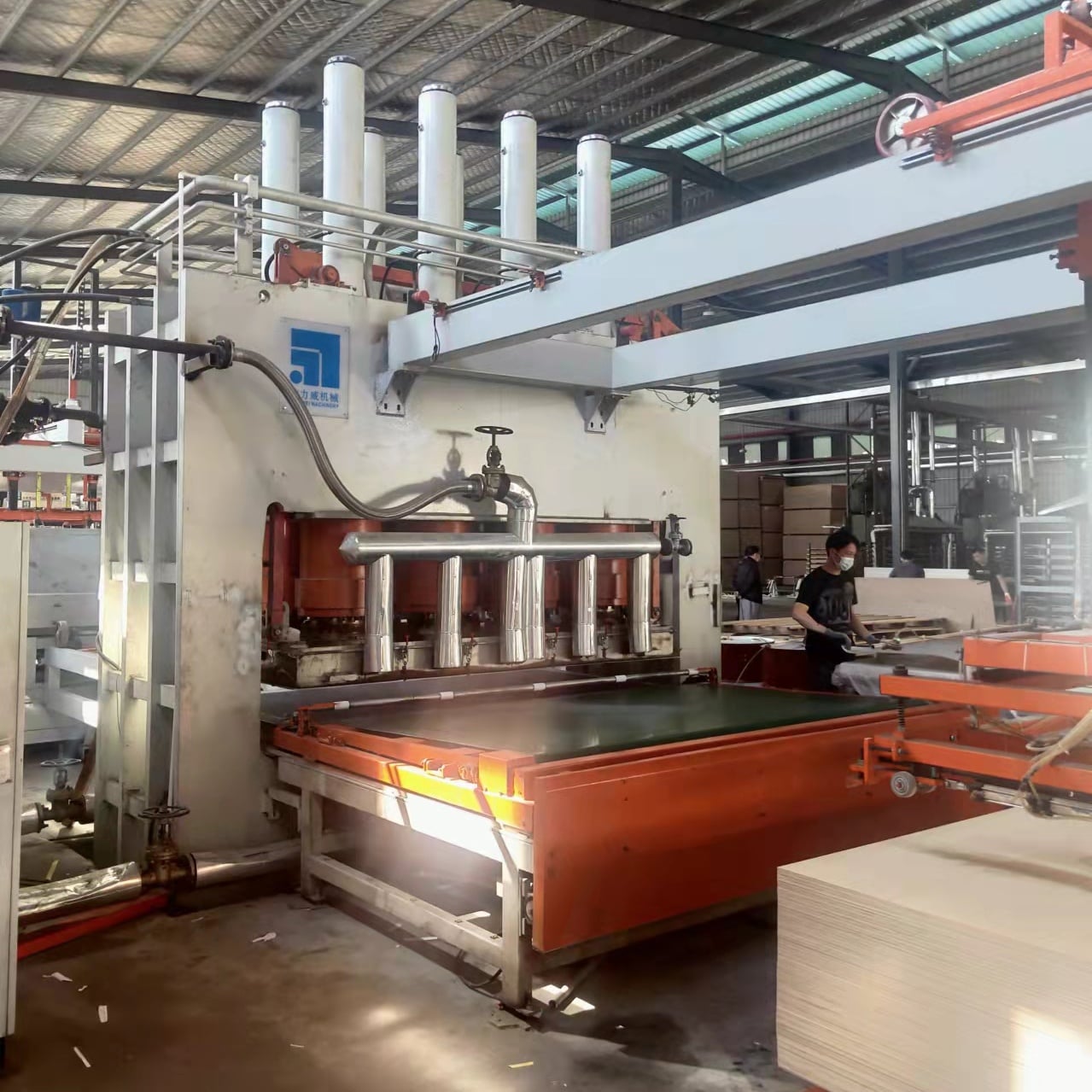
An automatic woodworking laminating press can shift repetitive actions into a defined sequence: board presentation, positioning, pressing, discharge, and transfer to the next buffer or stack. Think of it like passing material through a coordinated lane rather than asking each person to carry the workflow from one station to another. The press itself is only one part of that lane. If a worker must still drag boards into position or repeatedly clear an undersized discharge area, much of the physical burden remains.
Where Automation Removes Repetitive Work
1. More consistent feeding and positioning
At the infeed, an automatic woodworking laminating press can work with conveyors, alignment devices, or loading interfaces that present panels in a repeatable position. This reduces the need for an operator to guide each workpiece through the same physical motion. It can also make the handoff between preparation and pressing easier to observe. The practical aim is not to remove human judgment; it is to reserve that judgment for material checks, alignment confirmation, and exception handling.
2. Controlled press-cycle coordination
An automatic woodworking laminating press follows a programmed cycle rather than requiring an operator to manage every transition manually. That helps make the work rhythm more predictable. Cycle settings still need to be appropriate for the board, surface material, and production method, and operators should understand the safe sequence. Yet control-based coordination can reduce constant manual intervention during normal operation.
3. Less strain at discharge and stacking
The discharge side often decides whether an automatic woodworking laminating press truly lowers labor intensity. A conveyor, buffer, or downstream stacking arrangement can move finished panels from the press area in an orderly flow. Without that connection, a worker may simply inherit a faster stream of panels to lift. For this reason, labor planning should follow the panel from entry to exit rather than stop at the press frame.
Why Line Integration Matters
A woodworking laminating machine is part of a material-flow system. Feeding speed, buffer capacity, paper or adhesive preparation, press timing, discharge handling, and changeover procedures must work together. The confirmed industry context for short-cycle lamination emphasizes that material handling and speed matching influence actual throughput. That same logic applies to labor exposure: gaps between stations can turn automated pressing into manual catching-up.
A useful starting point is to map the present route of one panel before selecting an automatic woodworking laminating press. Mark every lift, turn, inspection point, waiting point, and rework loop, then separate tasks suited to conveyors or controlled interfaces from those that should stay with trained staff. This exercise often reveals that the most useful improvement is not a single feature but a better connection between stations.
Changeovers and Training Still Need Attention
An automatic woodworking laminating press does not make changeovers disappear. Different board formats, paper types, and process settings may still require adjustments, verification, and clean handoff instructions. In fact, operations can lose time when changeover planning is ignored, even if the normal cycle is automated. A practical evaluation should ask how guides, recipes, access points, and material staging support the specific mix a factory runs.
There is also a learning period. A newly installed automatic woodworking laminating press should be commissioned with calibration, documented operating procedures, and initial operator training. The available supplier context identifies on-site installation, parameter calibration, and operator training as relevant service elements. Those steps help operators understand what a normal cycle looks like, when to pause, and how to communicate an issue without resorting to improvised manual work.
Automation Must Reduce Exposure, Not Remove Safeguards
Because pressing and handling equipment contain moving and high-force areas, an automatic woodworking laminating press should be evaluated with guarding, emergency-stop access, lockout procedures, and clear operating zones in mind. General machine-guarding guidance highlights the importance of controlling point-of-operation hazards. The exact requirements depend on the installation location and applicable rules, so a factory should confirm its own compliance responsibilities with qualified safety personnel.
Automation can reduce routine contact with heavy panels and hazardous zones, but it should not encourage shortcuts. Operators still need accessible controls, safe clearing procedures, and enough space to work without crossing a material path. A woodworking laminating machine that is well integrated is easier to supervise because the normal flow is visible and abnormal conditions have defined responses.
A Practical Evaluation Checklist
- Trace the material route before and after the proposed automatic woodworking laminating press.
- List repetitive lifts, reaches, walking, and manual alignment tasks that the design addresses.
- Check whether infeed, press, discharge, and stacking capacities are matched.
- Review how the automatic woodworking laminating press handles the board sizes and surface materials used most often.
- Ask for a realistic commissioning and training plan, including responsibility for parameter setup.
- Confirm guarding, emergency controls, maintenance access, and local safety obligations.
- Include changeover time and exception handling when comparing alternatives.
Conclusion
An automatic woodworking laminating press reduces labor intensity when it converts repeated material handling and cycle coordination into a stable, safeguarded workflow. The strongest result comes from treating the press, feeding, buffering, discharge, and training as one operating system. For a buyer, the key question is not whether automation sounds advanced. It is whether the proposed automatic woodworking laminating press removes the specific lifts, delays, and handoffs that make each shift physically demanding.
 Hot News