EN




What Benefits Hydraulic Wood Laminating Press Brings To Manufacturers
For a panel producer, a hydraulic wood laminating press is more than a machine that closes two platens around a board. It is the point where substrate preparation, decorative paper or veneer, adhesive behavior, heat, and production discipline meet. When those elements are controlled together, manufacturers can pursue more consistent surface quality, steadier throughput, and a more predictable maintenance routine.
From a maintenance engineer’s view, the useful question is not simply “How much tonnage does the press have?” It is whether the press can apply repeatable force across the working area, maintain platen alignment, and remain serviceable after long production runs. A capable hydraulic wood laminating press supports those goals, but the actual result still depends on the board, bonding system, operating recipe, and line setup.
1. More uniform pressure can improve bond consistency
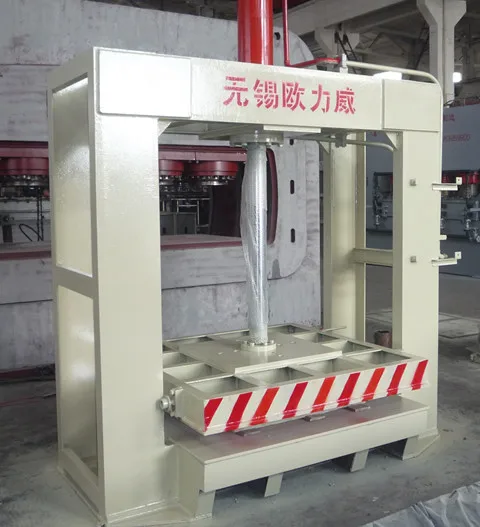
The central benefit of a hydraulic wood laminating press is controlled clamping force. In a well-configured system, hydraulic cylinders and guiding components help distribute pressure across the platen area rather than concentrating it at a few points. That matters when laminating MDF, HDF, particle board, plywood, veneer, or decorative surfaces, because local pressure variation can show up as weak adhesion, bubbles, edge lift, or uneven texture transfer.
It is a common assumption that higher tonnage automatically produces a better panel. In practice, pressure distribution and platen parallelism usually matter more than the headline load alone. A press that is properly matched to the panel size and bonding process can be more useful than an oversized unit that is difficult to control consistently.
2. Stable pressing supports repeatable surface appearance
Manufacturers of furniture panels, flooring, wall panels, and cabinet components are often judged by what the customer sees first: gloss, texture, color alignment, and edge condition. A hydraulic wood laminating press helps create a stable mechanical foundation for these outcomes by holding the assembly at the intended pressure while the bonding process takes place.
Where heat is part of the process, pressure is only one part of the recipe. Platen temperature needs to be stable, and dwell time needs to be sufficient for the resin or adhesive system being used. Running a cycle faster than the material system allows may improve a dashboard number while increasing the chance of cure-related defects. For this reason, a high pressure laminating machine should be evaluated as a process-control tool, not just a force-producing device.
3. Hydraulic control can make production planning more predictable
Repeatable cycles are valuable because they make scheduling, labor allocation, and downstream handling easier to manage. When pressure build-up, hold time, and release behavior are stable, operators can use a more consistent work instruction and quality team members have fewer unexplained variations to investigate.
That does not mean every factory needs the most automated configuration. If production is stable and changeovers are limited, a straightforward hydraulic wood laminating press with reliable controls may be the practical choice. If paper types, board thicknesses, or finish requirements change frequently, then recipe management, loading alignment, and operator access deserve more attention in the specification.
4. Better force management can reduce avoidable material loss
Rejected panels consume more than board and paper. They use adhesive, energy, operator time, inspection capacity, and space in the line. Consistent pressure and controlled closing behavior can help manufacturers reduce avoidable variation, particularly when paired with clean platens, correctly conditioned materials, and verified process settings.
There is an important qualification: a press cannot correct every upstream issue. If resin content varies from roll to roll, board moisture is outside the intended range, or the decorative sheet enters the press out of alignment, raising hydraulic pressure is rarely the right long-term correction. It may mask a symptom temporarily while increasing wear on the press. A stronger approach is to trace defects to the material, alignment, thermal, or pressure-control source before changing the recipe.
5. A maintainable hydraulic system protects uptime
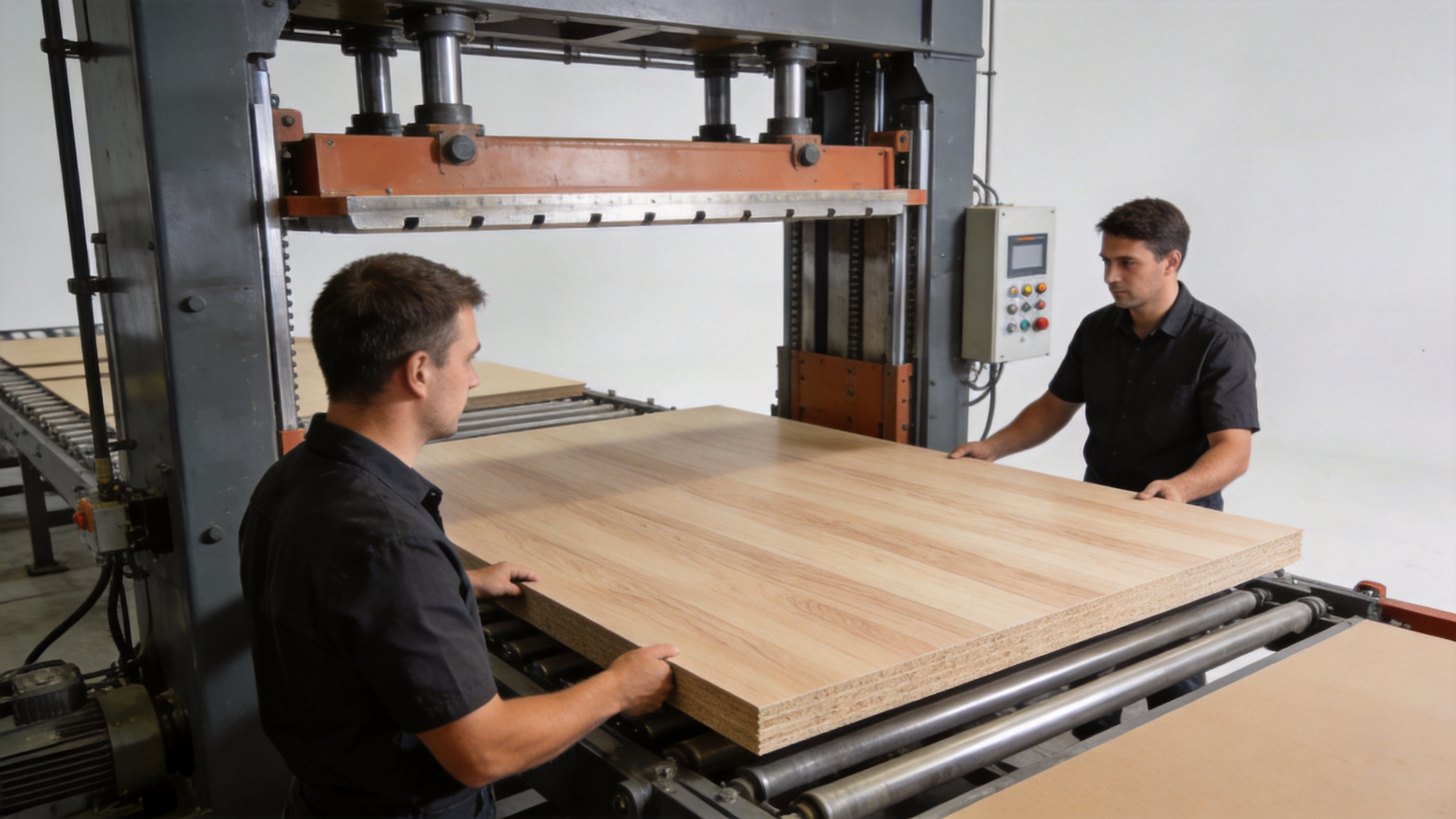
The business benefit of a hydraulic wood laminating press is closely linked to serviceability. Hoses, seals, valves, cylinders, filters, oil cooling, and sensors need to be accessible and included in a preventive-maintenance plan. During extended production runs, hydraulic oil temperature can rise; if cooling performance is not monitored, cycle behavior may drift even though the machine continues to run.
For that reason, manufacturers should ask suppliers how pressure is monitored, how oil cleanliness is maintained, which consumables are recommended, and which spare parts should be held locally. Operating at the maximum rated pressure for every cycle is not automatically the appropriate policy. When the process allows it, a correctly specified operating range can reduce stress on seals and guiding components while still delivering the required bond quality.
6. The press can be matched to different manufacturing priorities
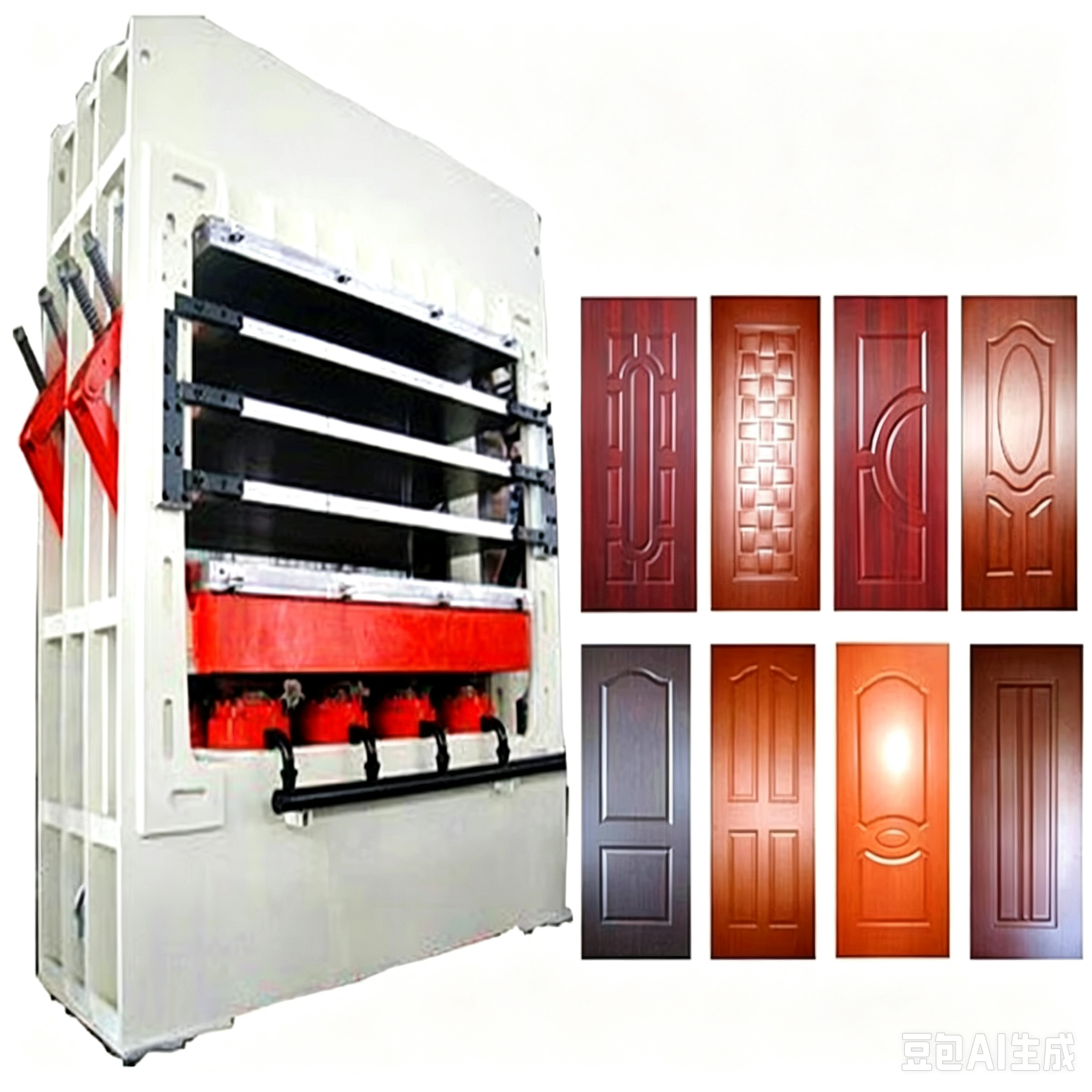
A hydraulic press is not one fixed answer for every plant. A furniture-board producer focused on frequent design changes may value easy adjustment and quick, accurate loading. A flooring producer may place more weight on platen condition and repeatability across long runs. A producer entering melamine lamination may need a complete view of paper handling, heat transfer, and press capacity rather than an isolated press quotation.
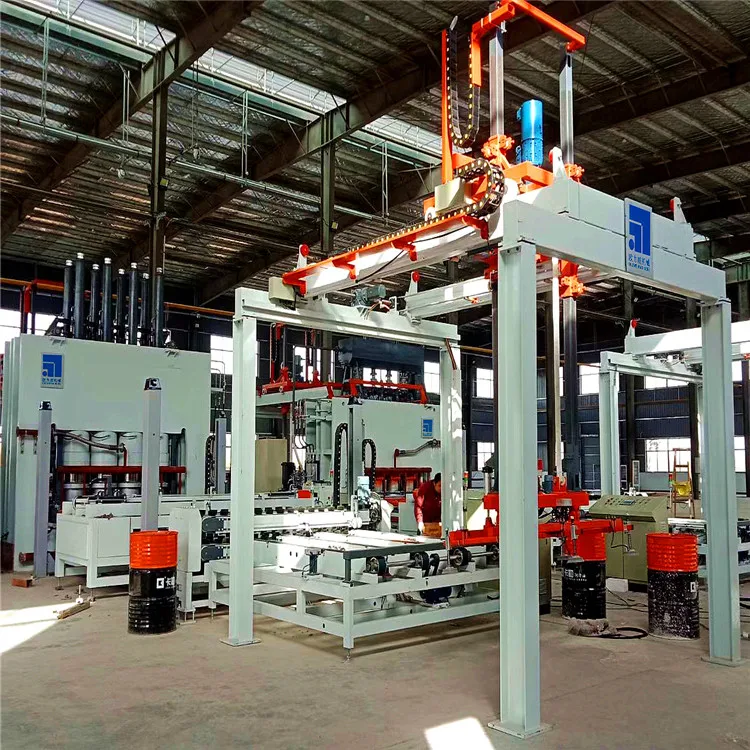
Wuxi Ouliwei Machinery Manufacturing Co., Ltd. focuses on melamine lamination equipment for MDF, HDF, particle board, and plywood applications. For buyers comparing a high pressure laminating machine, the most productive discussion begins with the intended panel dimensions, substrate, surface material, required output, local utilities, and maintenance capability. Those details determine whether a proposed configuration is genuinely suitable.
What to check before investing
- Pressure distribution: Ask how platen parallelism, guiding, and hydraulic control support even loading across the panel area.
- Thermal compatibility: If heat is used, confirm that platen temperature control fits the resin, paper, adhesive, and target cycle.
- Cycle realism: Base output expectations on the complete process, including loading, dwell, unloading, and changeover—not only closing speed.
- Material handling: Verify alignment, storage, and conditioning of boards and decorative materials before they enter the press.
- Maintenance access: Review oil cooling, filtration, seal replacement, spare-part planning, and available technical support.
- Configuration fit: Match daylight, platen size, opening count, automation level, and controls to the current product mix and realistic growth plans.
Conclusion
The practical value of a hydraulic wood laminating press is its ability to bring controlled, repeatable force into a wood-panel lamination process. When pressure distribution, platen condition, temperature, dwell time, material preparation, and maintenance are treated as one system, manufacturers can make a stronger case for stable quality and predictable operation. The right press is not necessarily the one with the largest specification; it is the one whose capabilities fit the panels, process, and people who will run it every day.


 Hot News