EN




Why Board Surface Laminating Machine Improves Finishing Effect
A decorative board can leave the press looking acceptable and still create problems later: uneven gloss, faint texture loss, edge lifting, or a surface that varies from board to board. That is why a board surface laminating machine matters beyond simply attaching a decorative layer. It creates the controlled combination of heat, pressure, timing, and platen contact that turns paper, film, or veneer into a repeatable finished surface.
As a technical consultant who has evaluated short-cycle lamination lines, I start with the production constraint rather than a headline specification. The first question buyers often ask is press tonnage. Tonnage matters, but only up to the point where the machine can deliver the needed unit pressure. For visible finish quality, the more revealing questions are whether temperature and pressure remain even across the platen, and whether those conditions can be repeated through a production shift.
Finishing defects usually start before the surface is visible
Surface finishing is the outcome of a process, not an isolated visual feature. In wood-panel production, the decorative material must contact the substrate evenly while resin or adhesive reaches the correct cure condition. If one section of the board sees less heat, less pressure, or a different dwell time, the finished face may develop uneven sheen, incomplete texture transfer, blisters, weak edges, or inconsistent bond strength.
A well-configured board surface laminating machine helps control these causes together. The press closes with a stable motion, holds the board package under distributed pressure, transfers heat through its platens, and releases at a planned point in the cycle. This is especially important for MDF, HDF, particle board, and plywood because substrate thickness, density, moisture condition, and decorative material can all change the process window.
How the machine improves the visible finish
1. Flatter, cleaner contact transfers the intended texture
Decorative boards often need a matte, gloss, woodgrain, stone, or registered texture. That effect depends on close, uniform contact between the press surface and the board package. Precision-machined chrome or mirror-polished steel platens are designed to support consistent contact across the panel. When contact is stable from the center to the corners, the surface is more likely to show a uniform visual effect rather than patches with different gloss or texture definition.
This is why a board surface laminating machine should be evaluated for platen condition and surface flatness, not only for its maximum force. A high force reading cannot compensate for poor contact geometry. If your product includes large-format furniture panels or flooring boards, edge and corner consistency deserves the same attention as the center of the board.
2. Uniform pressure supports bonding across the full panel
A technical lamination guide notes that adequate and uniform press or nip pressure is essential for good lamination. In practical terms, pressure distribution helps the decorative layer seat against the substrate consistently and reduces the chance that a good-looking center is paired with weak edges. Hydraulic systems with controlled pressure distribution can be particularly relevant where board sizes are large or the finished product has tight visual-quality expectations.
So how do you compare two press lines when their brochure force ratings look similar? You cannot do it from the rating alone. Ask how pressure is applied and monitored across the working area, how the platen and hydraulic system are maintained, and how the supplier approaches the board formats and decorative materials you actually run.
3. Stable heat and dwell time help resin cure consistently
Heat activates the bonding and curing stage, while time determines how long that condition is maintained. Published research on MDF surface lamination examined a constant temperature of 180°C with press times from 18 to 24 seconds. That does not create a universal setting for every plant, but it illustrates an important production reality: finishing quality is sensitive to a defined heat-and-time window.
For a laminating machine for wood production, repeatable thermal behavior is therefore a finishing tool. If the paper type and board thickness are stable, a proven recipe can work very well. If you change paper weights, resin systems, board thicknesses, or surface effects frequently, the calculation changes considerably. Operators need a machine and process discipline that make recipe adjustment controlled rather than improvised.
Why process control protects both appearance and yield
A board surface laminating machine improves more than the face of a single panel. When the press cycle is repeatable, the plant can reduce the uncertainty that drives rework, sorting, and quality disputes. Consistent heating, closing, pressure holding, and release make it easier to establish a production recipe and recognize when a material or setup change is responsible for a defect.
- More consistent gloss or matte appearance: even thermal and pressure conditions reduce panel-to-panel variation.
- Better edge and corner quality: full-area pressure control helps avoid weak zones that may appear after handling or downstream machining.
- Clearer troubleshooting: repeatable cycles make it easier to separate equipment, material, and recipe causes.
- More predictable throughput: a stable process can support continuous multi-shift production without treating every batch as a new trial.
What to check before selecting a laminating press
The right choice depends on your production context, not on one universal machine specification. Before investing, build the discussion around the boards you make and the finish your customers inspect.
- Define the board and decorative stack. List substrate type, thickness range, board size, paper or film type, resin system, and target surface effect.
- Examine platen quality and maintenance access. Ask how flatness, surface condition, heating behavior, and cleaning are managed over time.
- Review pressure distribution, not only total force. Confirm how the press supports consistent conditions at edges and corners as well as the center.
- Plan the process window. Treat temperature, unit pressure, and press time as a tested recipe. One published board-lamination reference lists 140–190°C and 2.0–3.0 MPa, but your material system must determine the final values.
- Match automation to changeover frequency. A line making one stable board specification has different needs from a plant changing decors and thicknesses throughout the week.
- Confirm commissioning details early. Electrical supply, control requirements, and safety standards should be agreed before shipment; resolving an electrical mismatch after delivery can delay commissioning.
A practical finishing-quality approach
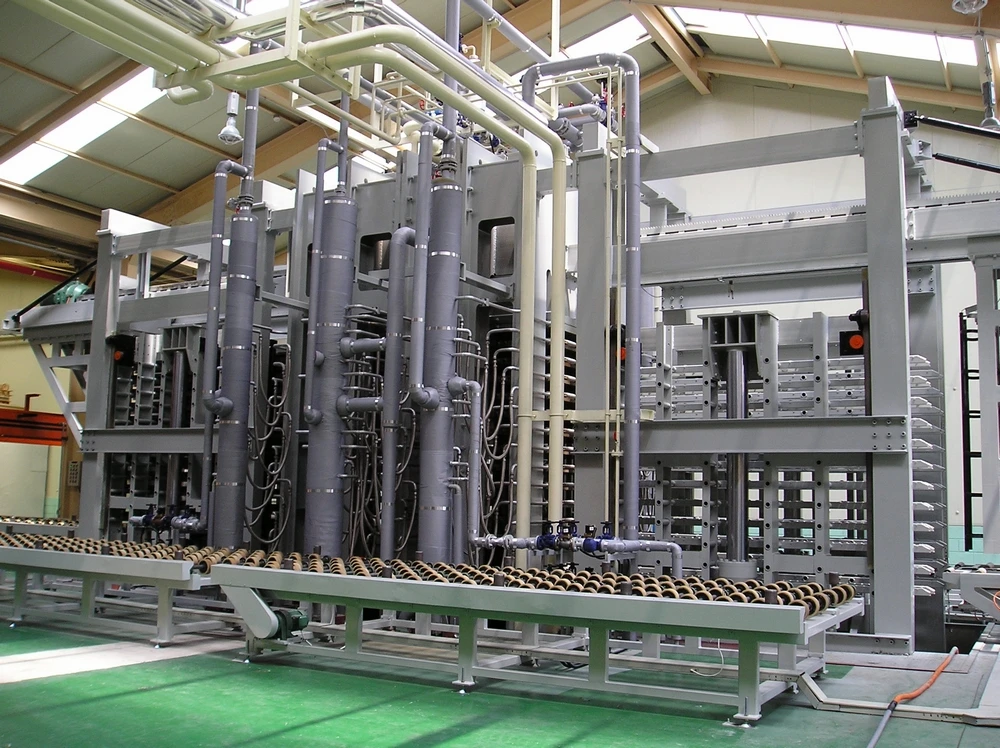
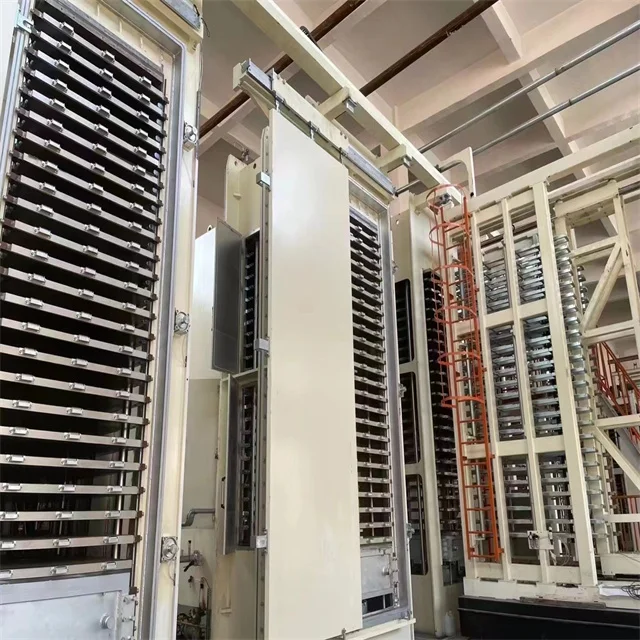
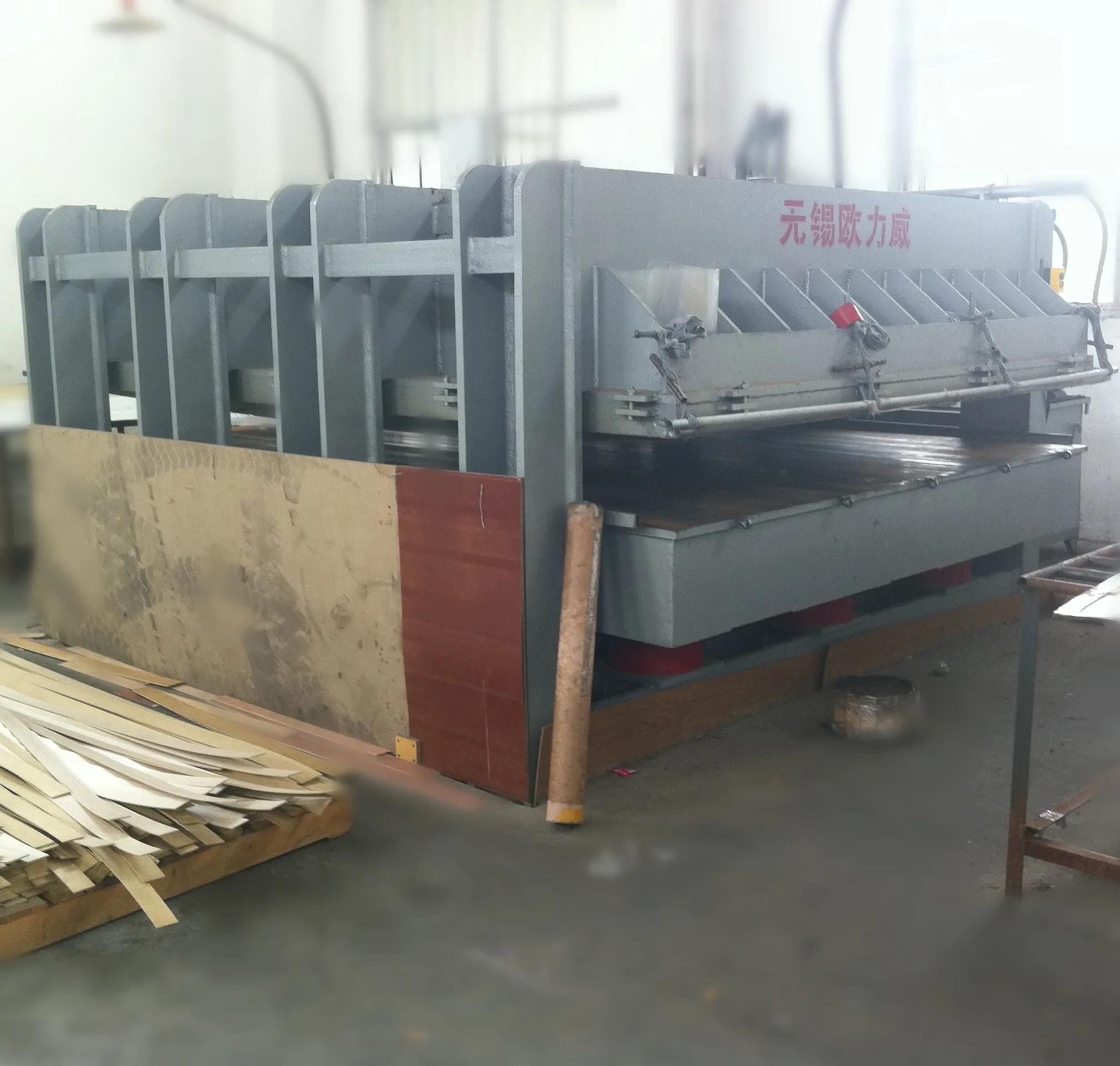
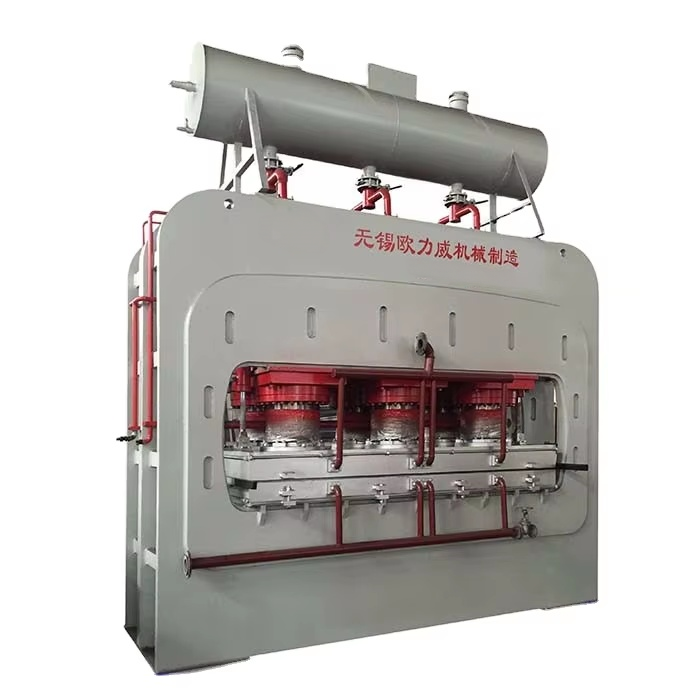
Wuxi Ouliwei focuses on melamine lamination equipment, including short-cycle lamination lines, melamine press machines, and impregnation lines. For buyers comparing options, that category focus can support a more useful technical conversation about the interaction of platens, hydraulic pressure, board format, and decorative materials. It should not replace a review of your own samples, production goals, and service requirements.
Ultimately, a board surface laminating machine improves finishing effect because it makes the critical conditions of lamination controllable and repeatable. Start with the visual standard you need on the finished board, then work backward through contact quality, pressure distribution, heating, dwell time, and changeover needs. That approach gives you a better basis for selecting a laminating machine for wood production that supports both appearance and dependable output.

 Hot News