EN




Thermal Curing Mechanics in Wood Flooring Laminating Hot Press Systems
Achieving exceptional flooring wear resistance requires precise chemical cross-linking between overlay melamine paper and high-density fiberboard (HDF) core materials. A specialized wood flooring laminating hot press provides uniform thermal energy and hydraulic pressure to melt the resin matrix, allowing aluminum oxide particles (Al2O3) embedded in the top layer to form a dense wear barrier. Without a synchronized wood flooring laminating hot press, incomplete resin polymerization leaves micro-porosities that degrade final flooring wear resistance under mechanical friction.
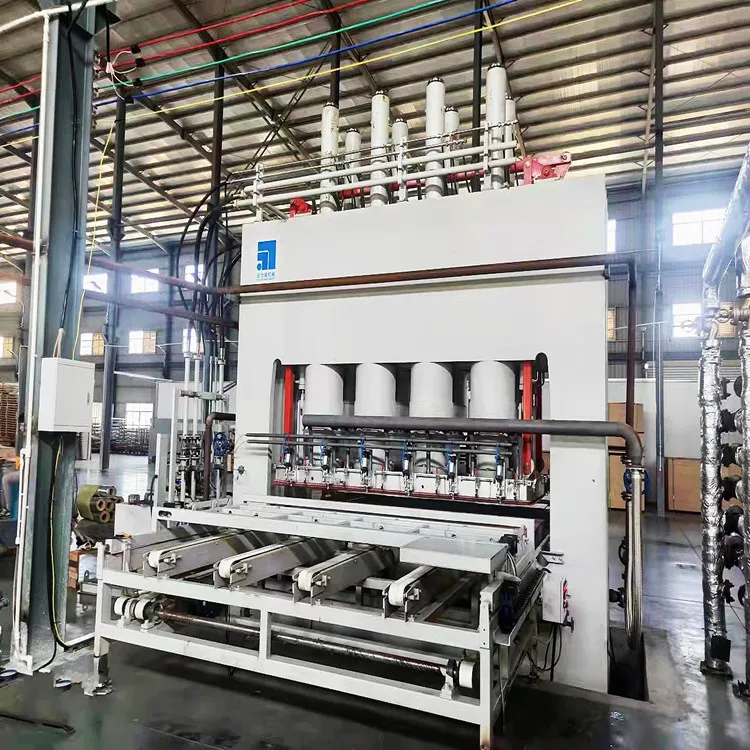
During short-cycle thermal pressing, platen temperature uniformity directly impacts resin liquid phase flow and curing kinetics. Advanced hot press units engineered by industry specialists such as Wuxi Ouliwei feature internal multi-zone thermal fluid channels that keep platen surface temperature variation under ±1°C across the entire pressing surface. Maintaining accurate temperature stability ensures that the melamine resin cures completely without burning decorative papers, directly reinforcing flooring wear resistance ratings according to EN 13329 and ISO 24334 international testing protocols.
| Operating Parameter | Standard Setting Range | Impact on Flooring Wear Resistance |
| Hydraulic Specific Pressure | 3.8 - 4.5 MPa | Eliminates void pockets around Al2O3 particles |
| Hot Platen Temperature | 195°C - 205°C | Drives full melamine resin cross-linking |
| Total Press Cycle Time | 16 - 22 seconds | Dictates Taber wear revolutions |
| Thermal Oil Channel Velocity | 2.5 - 3.2 m/s | Prevents localized thermal drop across platens |
Integrating an automated wood flooring laminating hot press into production lines secures consistent surface hardness. Proper hydraulic pressure management allows decorative paper and wear-resistant overlays to bond seamlessly with HDF substrates, raising the finished floor from standard AC3 residential durability levels up to heavy commercial AC5 and AC6 classifications.
Pressure Distribution Dynamics and Aluminum Oxide Retention
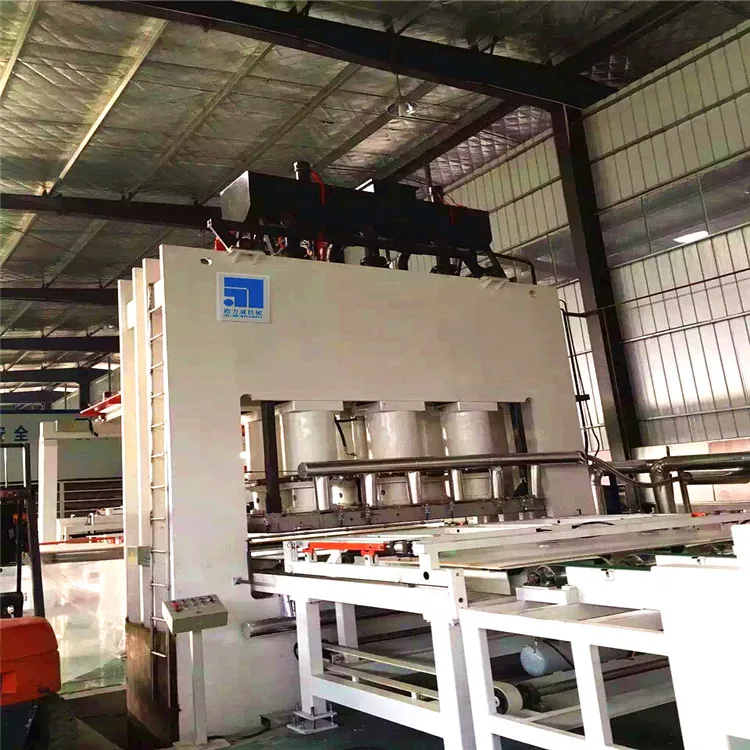
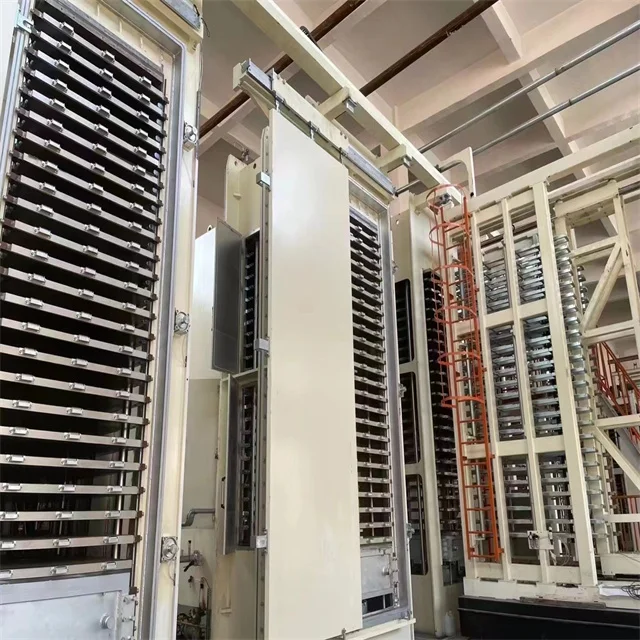
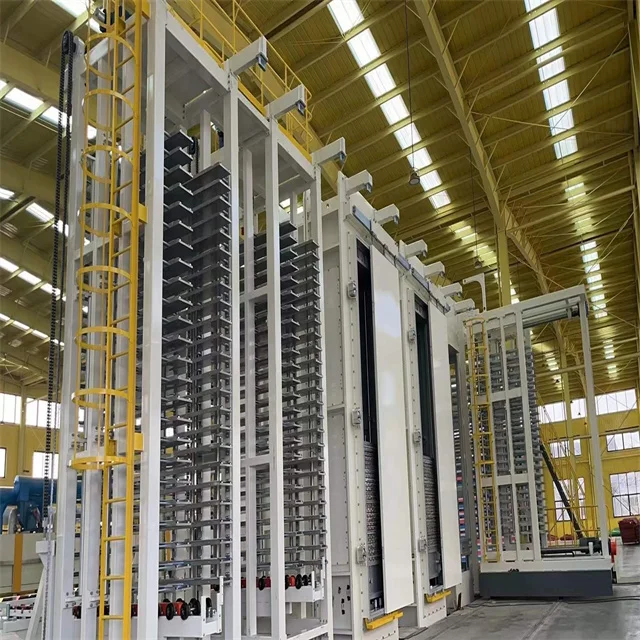
Surface durability relies heavily on maintaining a solid distribution of wear particles throughout the resin matrix. When operating a heavy-duty wood flooring laminating hot press, multi-cylinder hydraulic architecture ensures even tonnage distribution across 4x8 ft or 6x9 ft press beds. If local pressure drops below target thresholds during the curing cycle, aluminum oxide particles drift out of alignment, causing patchy surface wear and reducing overall flooring wear resistance.
Modern short cycle hot press systems utilize synchronous secondary pressure relief valves to control hydraulic ram movement during resin liquefaction. As heating platens apply contact pressure, the resin temporarily liquefies for 3 to 5 seconds before undergoing irreversible thermosetting polymerization. A high-precision wood flooring laminating hot press holds constant pressure during this critical window, forcing liquid resin into the porous surface fibers of the core board to establish a reliable mechanical anchor.
Key mechanical parameters governing particle retention include:
-
Platen Parallelism Precision: Maintaining hydraulic frame alignment within 0.05 mm prevents uneven resin squeeze-out along board margins.
-
Rapid Tonnage Ramp-Up: Achieving full specific pressure (up to 4.5 MPa) within 1.5 seconds stops pre-curing before full contact occurs.
-
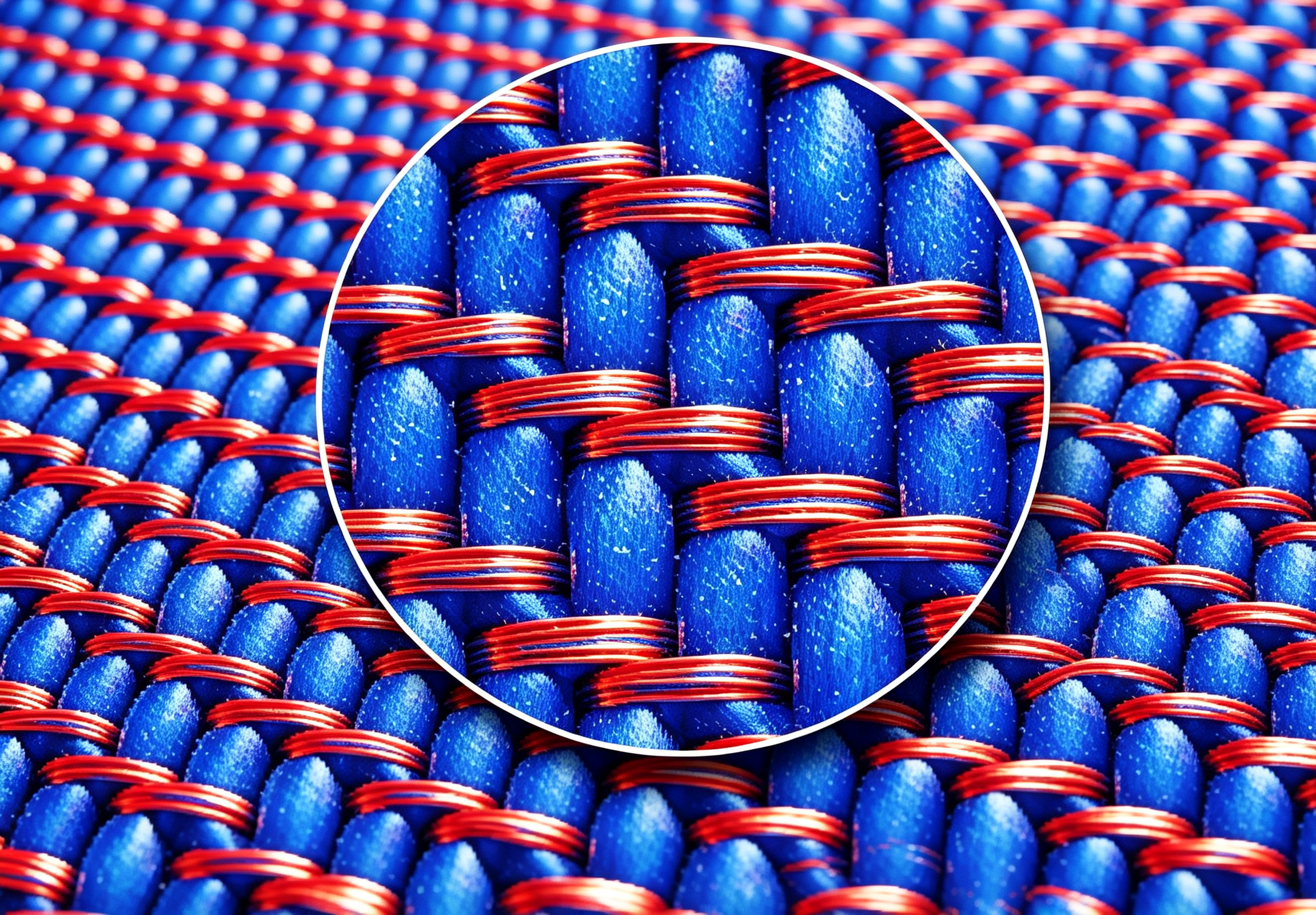
Cushion Pad Thermal Transfer: Calibrated copper-wire mesh pads absorb micro-vibrations and buffer thermal shocks to protect decorative paper textures.
Factories utilizing precision machinery built by Wuxi Ouliwei observe lower scrap rates during Taber abrasion testing (EN 438-2). Consistent hydraulic loading across the entire bed prevents surface clouding while consolidating hard wear particles, delivering superior flooring wear resistance for demanding commercial installations.
Preventing Surface Micro-Cracking and Resin Delamination
Interfacial stress during cooling can create invisible micro-cracks in cured melamine resin, compromising long-term flooring wear resistance. An industrial-grade wood flooring laminating hot press prevents internal stresses by coordinating multi-stage decompression profiles. Releasing hydraulic pressure in micro-stepped intervals permits trapped steam and volatile gases to escape without causing surface blistering or micro-fractures in the crystalline resin layer.
Core board moisture content directly interacts with press cycle parameters. When raw HDF boards enter the wood flooring laminating hot press with moisture levels between 4% and 7%, thermal energy vaporizes water content at the bond line. If the press opens too quickly, internal steam pressure tears apart the curing resin network, diminishing surface abrasion properties and structural bond strength.
Essential operational rules for minimizing defect formation include:
-
Core Moisture Control: Pre-conditioning boards avoids steam pressure buildup inside the hot press cavity.
-
Chrome Plate Maintenance: Regular inspection of textured steel press plates stops resin buildup that disrupts surface heat flow.
-
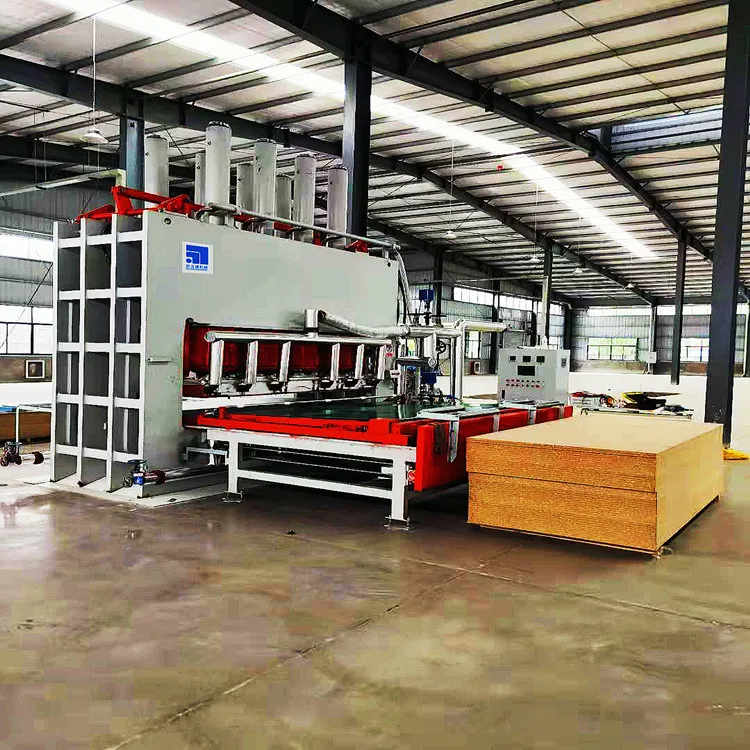
Synchronized Charging System: Automated belt loaders transfer raw assemblies smoothly into the wood flooring laminating hot press to preserve layout alignment.
Implementing precise cycle parameters on the wood flooring laminating hot press protects finished laminate planks against micro-delamination under heavy foot traffic. Complete resin cross-linking locks aluminum oxide grains firmly in place, maximizing overall flooring wear resistance while preserving wood grain visual clarity.
Laboratory Testing Standards for Wear-Resistant Wood Laminates
Validating the impact of a wood flooring laminating hot press on finished flooring wear resistance involves rigorous laboratory testing under international standards. Once laminated boards exit the hot press system, factory quality control technicians trim sample specimens for destructive mechanical and surface evaluation:
-
Taber Abrasion Resistance (EN 13329 / EN 438-2): A rotating specimen contacts abrasive paper-faced wheels under standard loads. The number of wear revolutions required to achieve initial wear-through (IP value) determines whether the flooring reaches AC3 (2,000 cycles), AC4 (4,000 cycles), or AC5/AC6 (6,000+ cycles) ratings.
-
Impact Resistance Testing (EN 13329 Annex F): Small and large-diameter steel ball drops measure resistance to surface cracking. Complete thermal curing inside the wood flooring laminating hot press absorbs impact energy, preventing surface fracture.
-
Cross-Cut Adhesion Test (ISO 2409): Parallel lattice cuts assess physical adhesion between overlay paper and core board. High-pressure processing ensures zero flake-off at lattice intersections.
By refining hydraulic pressure profiles and thermal fluid circulation on the wood flooring laminating hot press, laminate manufacturers continuously boost flooring wear resistance. Equipment setups from Wuxi Ouliwei give producers the operational stability needed to deliver long-lasting laminate products into competitive international flooring markets.
 Hot News