EN




How Woodworking Hot Press Machine Meets Diversified Panel Processing Needs
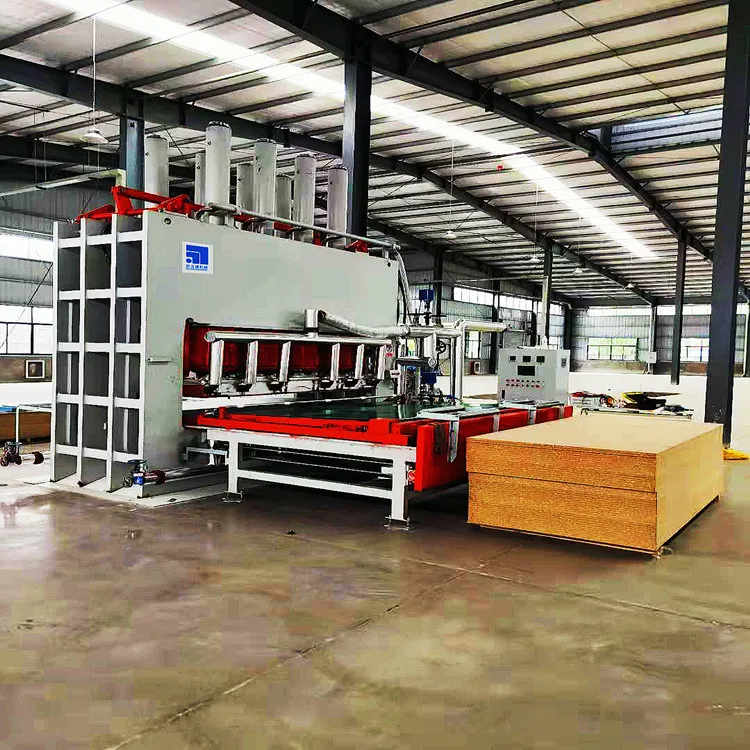
A panel plant rarely makes just one kind of board forever. Decorative furniture panels, door skins, flooring substrates, wall panels, and laminated sheet products can each place different demands on a woodworking hot press machine. The useful question is not simply how much tonnage a press can produce. It is whether its pressure, heat, opening arrangement, controls, and material flow fit the panels you intend to process.
From a technical selection perspective, panel quality comes from a connected process. Controlled heat, pressure, and pressing time work together; changing one setting may require a review of the other two. That is why a press chosen only by nominal capacity can create avoidable adjustment work when production expands into a new panel category.
Why diversified panel production changes press requirements
Woodworking machinery for panel production has to accommodate more than board dimensions. Substrate density, veneer or décor thickness, adhesive system, target surface appearance, and planned output all affect the recipe. A furniture-board producer may need repeatable decorative lamination across frequent décor changes. A flooring program may place more emphasis on stable surface consolidation and coordinated feeding. A door or wall-panel operation may have a wider mix of sizes and a lower tolerance for marks or uneven bonding.
That makes a woodworking hot press machine part of a wider process rather than a standalone answer to every panel task. It is the part of the line where upstream material preparation and downstream handling become visible in the finished surface. If the board enters with variable moisture, paper alignment, or adhesive distribution, adding more pressure alone will not reliably correct the result.
Start with the panel family, not the headline specification
Decorative furniture board and melamine-faced panels
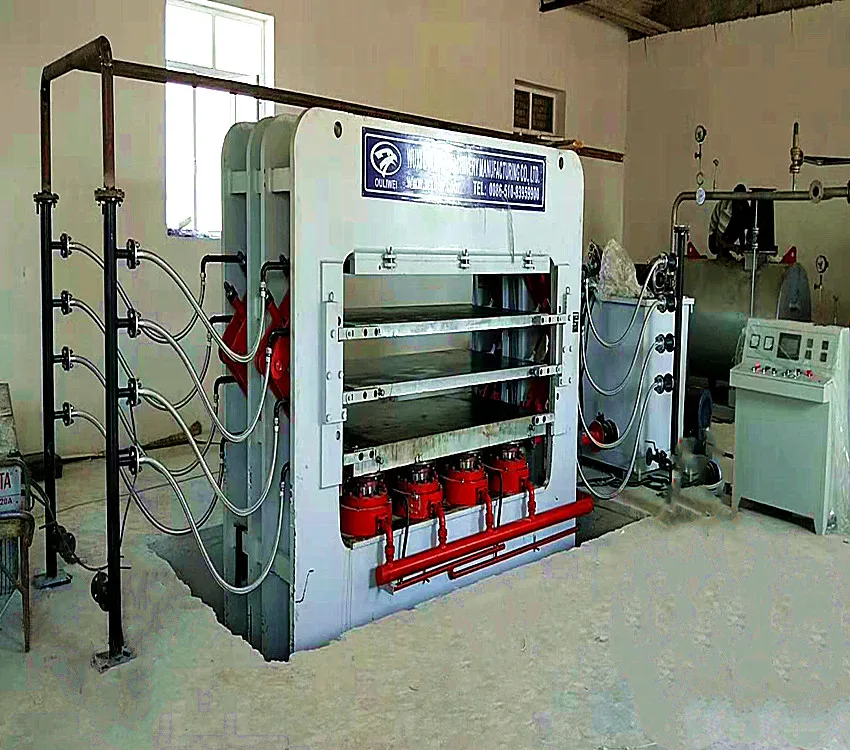
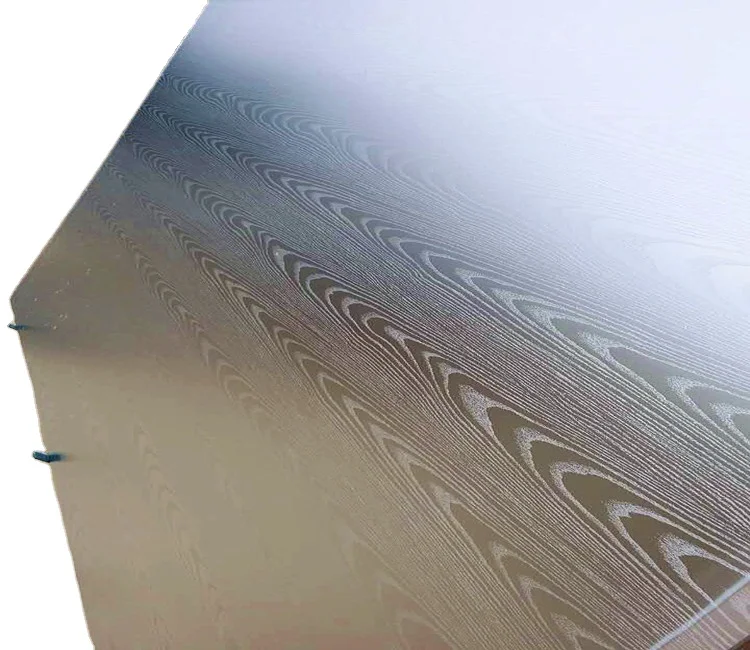
For decorative board, uniform contact across the working area matters because small differences can show up as inconsistent texture, gloss, or bond appearance. Buyers should examine platen flatness, heating-zone control, pressure distribution, and the repeatability of the closing and dwell sequence. Fast cycles can be useful, but only after the material and process window support them. A shorter cycle that creates extra inspection or rework is not a meaningful gain.
Where décor changes are frequent, recipe management and operator-friendly adjustment deserve attention. The goal is to move from one validated combination of board, paper, and process settings to another with traceable settings rather than relying on individual memory.
Flooring substrates and high-wear surface programs
Flooring-related panel work often calls for consistent processing over long runs. Here, a woodworking hot press machine should be assessed for thermal stability during production, material alignment, and the way panels are transferred before and after pressing. Surface consistency is influenced by the full path, not just the moment under the platen. For example, a cooling or stacking arrangement that does not suit the board can contribute to later flatness concerns even when the press cycle itself appears stable.
It is reasonable to ask for a configuration review around the actual substrate and overlay combination. That review should focus on trial results and process control rather than a generic claim that one pressure level suits every flooring design.
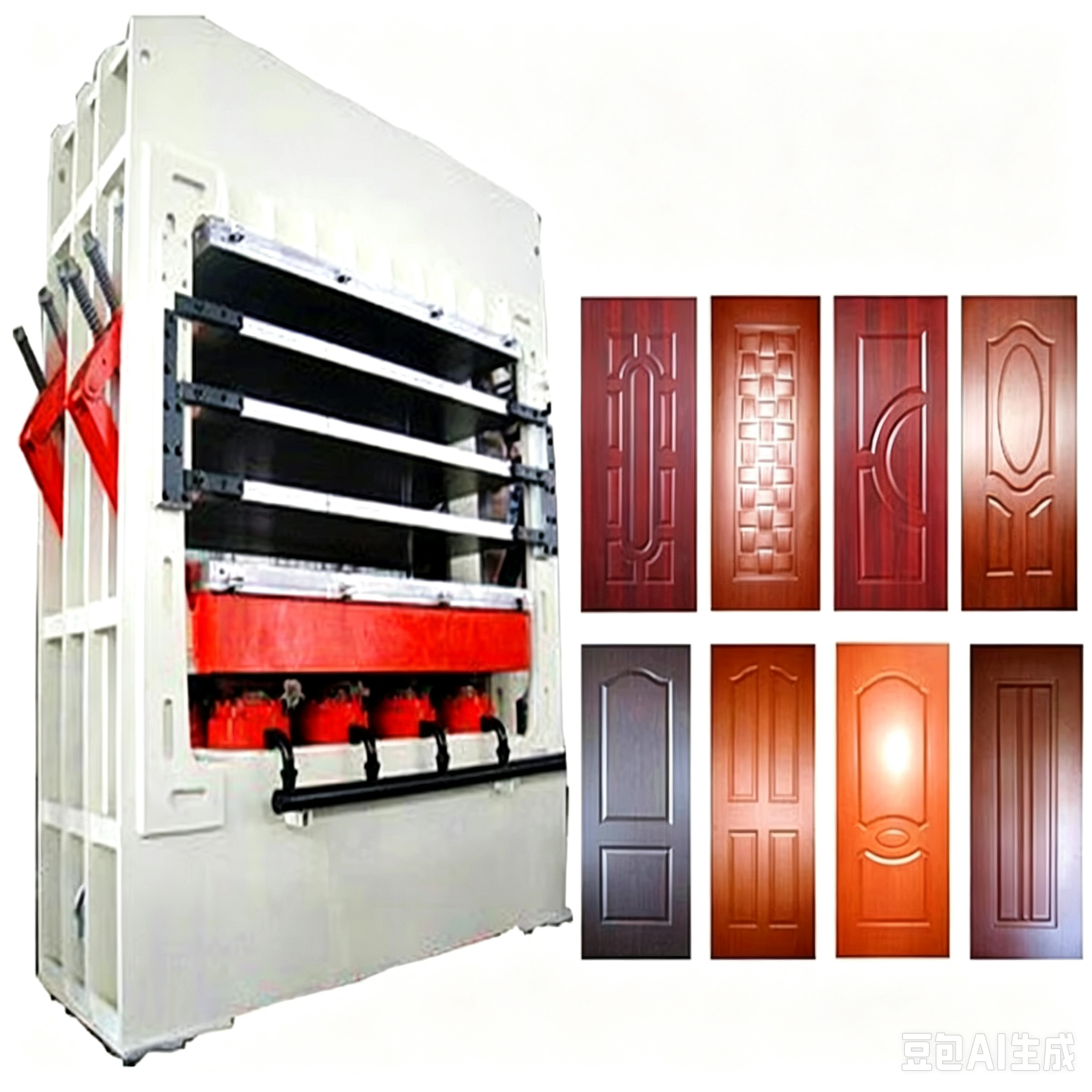
Door skins, wall panels, and mixed-format work
Mixed-format production introduces a different challenge: flexibility. The press must accommodate the practical range of panel sizes, loading patterns, and surface constructions without turning every changeover into a long interruption. Depending on the intended mix, a single-opening configuration may support controlled customization, while a multi-opening arrangement can make sense for stable, repeated runs. Neither arrangement is automatically the right choice; the production schedule and handling capacity decide the trade-off.
Match heat, pressure, and time as one process window
Most hot-press guidance describes heat, pressure, and time as core variables, and the relationship is more important than any isolated number. Temperature affects how the material and adhesive system respond. Pressure brings layers into contact and helps form the required panel profile. Dwell time gives the process enough time to reach a stable result. The workable setting depends on the board construction, moisture condition, surface material, and production target.
This is often the point where a selection discussion becomes more useful. Higher tonnage does not automatically create a better surface. Once the press can apply the required load evenly, temperature uniformity and recipe control may have more influence on repeatability than a larger peak number. Likewise, a faster cycle does not necessarily improve output if it narrows the operating window or increases defects.
- Check pressure distribution: ask how the platen and hydraulic arrangement support even loading across your usable panel area.
- Check thermal behavior: review heating method, zone control, monitoring points, and how temperature is maintained during a production run.
- Check the cycle sequence: assess closing, pressing, dwell, opening, and handling as a whole rather than comparing only a stated cycle time.
- Check recipe repeatability: determine how validated settings are stored, recalled, and adjusted when panel constructions change.
Build the press into the panel-production flow
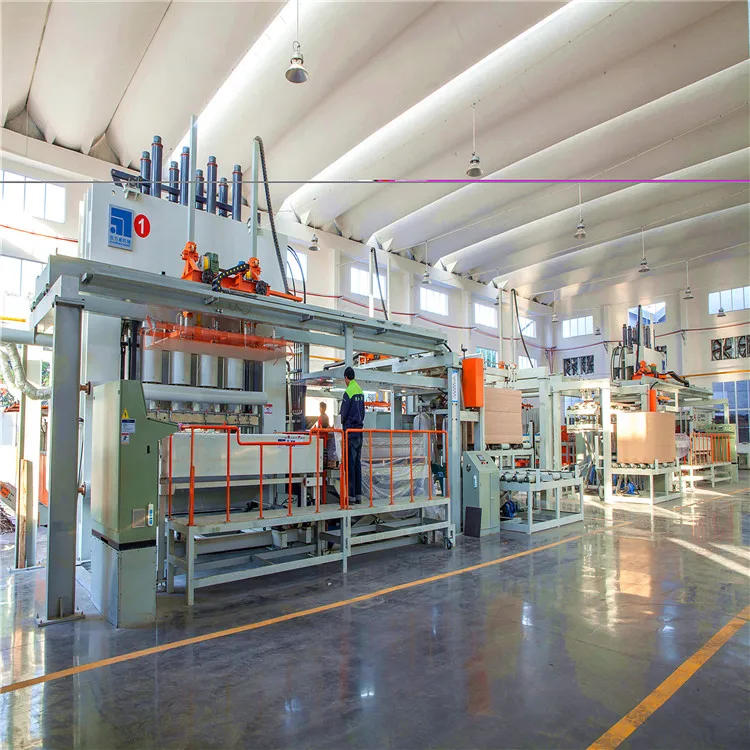
A woodworking hot press machine performs more predictably when it is specified with the surrounding line in view. Consider board infeed condition, décor or veneer positioning, loading method, press discharge, cooling, and stacking. This is particularly relevant for woodworking machinery for panel production that must serve several product lines. A bottleneck in paper alignment or panel cooling can limit the benefit of a capable press.
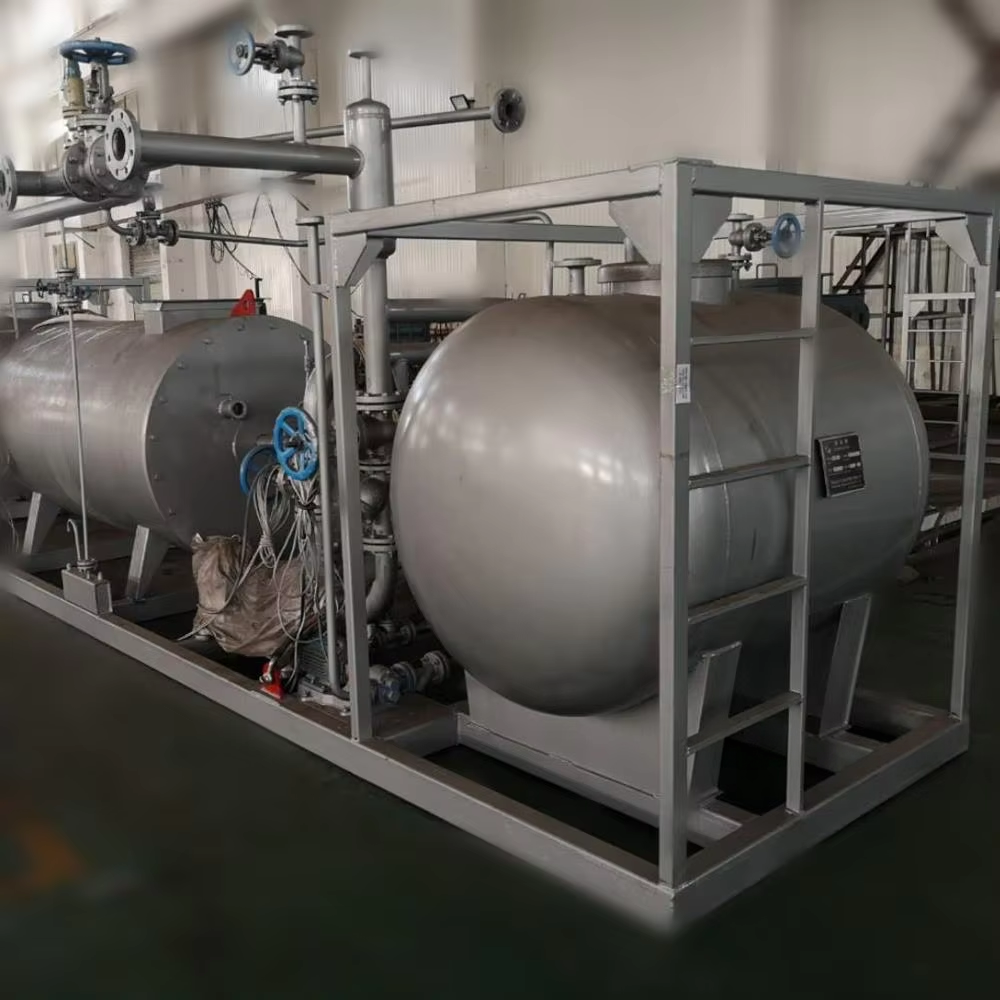
For operations evaluating melamine lamination equipment, it can also be useful to look at the relationship between impregnation, material preparation, and the press cycle. The equipment category is interconnected: a stable press schedule depends on inputs that are prepared consistently. For that reason, production, maintenance, and quality personnel should be part of the specification review.
A practical evaluation checklist
- List every panel family you expect to process, including sizes, thicknesses, substrates, and surface materials.
- Separate stable high-volume products from short-run or customized work.
- Define the process variables you need to monitor: platen temperature, pressure profile, dwell time, alignment, and transfer condition.
- Review the opening configuration against actual loading, unloading, and labor capacity.
- Plan trials with representative materials and acceptance criteria for surface appearance, bonding, flatness, and repeatability.
- Ask how commissioning, maintenance access, spare-parts planning, and operator training will support the chosen configuration.
Choose configuration fit over specification maximization
The value of a woodworking hot press machine comes from how well it supports the panel mix you actually make. A plant producing recurring decorative boards may prioritize repeatable recipe control and steady cycle timing. A business serving varied door and wall-panel orders may place more value on format flexibility and manageable changeovers. A flooring-focused line may pay closer attention to stable thermal behavior and downstream handling.
Before committing, map the machine to the production flow, validate the process window with your materials, and identify which variables your team must control every shift. That approach gives woodworking machinery for panel production a clearer job: not to chase the largest headline figures, but to produce the required panel quality across the applications that matter to your business.
 Hot News